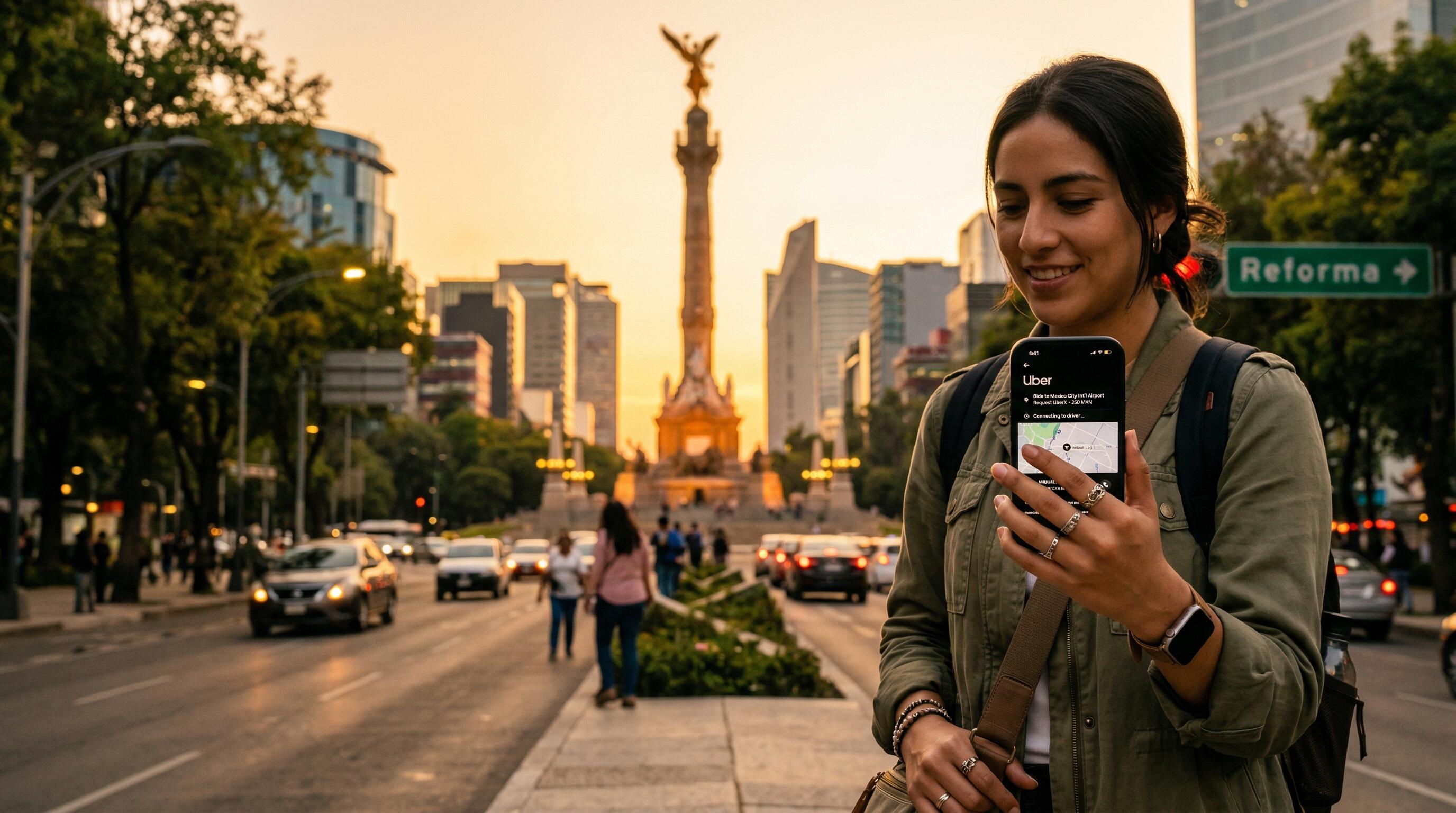
Is Uber Safe in Mexico in 2026? A City-by-City Safety Guide
Is Uber Safe in Mexico in 2026? A Traveler's Honest Guide
The short answer: Yes — Uber is generally one of the safest ways to get around in Mexico's major cities in 2026. It's safer than street taxis in most urban areas, but there are specific risks you need to know about by city.
This guide covers everything: how Uber actually works in Mexico, which cities are fully operational, alternatives like Didi and InDriver, and the real safety risks (and how to avoid them).
---
How Uber Works in Mexico (What's Different from Home)
Uber operates in 30+ Mexican cities as of 2026. The app works the same way — you book via the app, pay by card or cash, and get a licensed driver. But there are a few Mexico-specific things to know:
- Cash is an option. Unlike the US, many Mexican Uber rides allow cash payment. This is useful if your international card has issues.
- Driver verification is the same. All drivers go through background checks, license verification, and vehicle inspection.
- GPS tracking and trip sharing. The standard safety features you're used to — live GPS, share trip, emergency button — all work in Mexico.
- Surge pricing peaks on weekends and holidays. Budget accordingly, especially in tourist zones.
- Always verify the license plate, car model, and driver photo before getting in
- Don't accept rides from drivers who approach you outside the app
- In late-night scenarios (2am+), consider staying in your location until the car matches exactly
- Avoid showing expensive phones or jewelry while waiting for your Uber
- Don't wait at the curb in front of hotels — meet your driver slightly off the main road
- If approached by aggressive taxi drivers, stay calm and walk back to the hotel lobby
- The airport is a regulated zone — only use authorized transport desks or pre-booked Uber via the app
- Taxi drivers blocking Uber vehicles at popular pickup zones
- Verbal confrontations (rarely physical, but documented)
- Some hotels quietly "discouraging" Uber to protect relationships with local taxi unions
- Highest risk profile: Late-night rides in CDMX without trip-sharing enabled
- Most reported issue: Phones stolen while waiting for Uber (not inside the vehicle — while waiting on the curb)
- Virtually zero incidents: In-vehicle incidents with verified Uber drivers in major tourist cities
- CDMX, GDL, MTY, QRO, Puebla → Uber is excellent
- Cancún, Puerto Vallarta, Tijuana → Uber works well, minor precautions
- Los Cabos, Tulum → Use alternatives or hotel transport
---
City-by-City Uber Safety Breakdown
Mexico City (CDMX) — ✅ Fully Operational, Generally Safe
Uber is widely used and generally safer than street taxis in CDMX. The city has documented cases of "express kidnappings" linked to fake taxis hailed on the street — Uber largely eliminates this risk because drivers are tracked.
Key tips for CDMX:
Neighborhood note: Uber works everywhere in CDMX, including Polanco, Roma, Condesa, Centro Histórico, and the airport. No significant dead zones.
Cancún — ✅ Available in Hotel Zone and Downtown
Uber operates in Cancún, though it has faced friction from taxi unions (more on this below). It works reliably in the Hotel Zone (Zona Hotelera) and downtown.
Cancún-specific caution: There have been incidents where taxi drivers harass or even threaten Uber passengers near tourist areas. To minimize risk:
Guadalajara — ✅ Widely Available, Very Safe
GDL is one of the more reliable Uber cities in Mexico. Strong driver supply, competitive pricing, and no significant safety incidents linked specifically to Uber.
Tip: GDL's traffic peaks during business hours. For airport trips, book 30-40 mins early.
Puerto Vallarta — ✅ Available, Use with Standard Precautions
Uber works in Puerto Vallarta, including the Hotel Zone and downtown. Street taxis are more common, but Uber gives you the accountability layer.
Note: The airport pickup zone can be confusing. Follow the app's map pin carefully — meet points are sometimes a 3-5 minute walk from arrivals.
Los Cabos (Cabo San Lucas / San José del Cabo) — ⚠️ Limited Service
Uber operates in Los Cabos but with significantly reduced driver supply compared to mainland cities. Wait times can be 15-25 minutes, especially late at night.
Alternative: In Los Cabos, pre-arranged hotel transport or licensed taxi stands (look for authorized green taxis) are often more reliable than Uber.
Tulum — ⚠️ Very Limited
Uber has minimal presence in Tulum. The town is small and street taxi culture dominates. Negotiate prices before getting in, or use your hotel's recommended taxi contacts.
What to use instead: Tulum has a growing network of bike taxis and colectivos (shared vans) for short distances. For longer routes to Cancún or the airport, book via a hotel concierge or use the Tulum-specific app INCO.
Monterrey — ✅ Very Reliable
Monterrey is one of Mexico's safest major cities for business travel, and Uber is fully operational with strong driver supply. Ideal for corporate travelers.
Tijuana — ✅ Available, Higher Caution Warranted
Uber works in Tijuana but the security context requires extra awareness. Use during daylight for unfamiliar routes. For border crossing logistics, Uber can take you to the San Ysidro pedestrian crossing, but cannot cross into the US.
---
Uber vs Street Taxis: The Real Safety Comparison
| Factor | Uber | Street Taxi |
|--------|------|-------------|
| Driver accountability | ✅ Full (ID, plate, GPS) | ❌ Minimal |
| Express kidnapping risk | ✅ Very low | ⚠️ Present in CDMX, border cities |
| Price transparency | ✅ Fixed upfront | ⚠️ Negotiate or risk overcharge |
| Payment options | ✅ Card or cash | Usually cash only |
| Airport arrivals | ✅ Easy to verify | ⚠️ Pirate taxis common |
| Late night reliability | ✅ App-tracked | ❌ Risky in some areas |
Bottom line: In Mexico's urban areas, Uber consistently outperforms street taxis on safety metrics. The accountability layer (GPS tracking, driver ID, trip sharing) eliminates the most common risks.
---
Uber Alternatives in Mexico
Didi — The Main Competitor
DiDi operates in 70+ Mexican cities, often with lower prices than Uber. The app works similarly and has the same core safety features (GPS tracking, emergency button, driver verification).Best for: Budget travelers, smaller cities where Uber supply is thin.
Download: Available on iOS and Android. Requires Mexican phone number for registration (workaround: use WiFi calling or ask hotel to help register).
InDriver — Negotiated Pricing
InDriver lets you set your offer price and drivers accept or counter. Popular in mid-size cities like Puebla, Morelia, and Querétaro.Best for: Longer trips where you want to negotiate. Less suited for quick urban hops.
Cabify — Premium Option
Cabify focuses on professional drivers and slightly higher-end vehicles. Good option for business travelers or late-night rides in CDMX and GDL.---
The Taxi Union Problem: What You Actually Need to Know
In several Mexican cities — particularly Cancún, Los Cabos, and tourist corridors — traditional taxi unions have pushed back aggressively against Uber. This occasionally results in:
What to do:
1. Meet your Uber slightly away from the main hotel entrance
2. If confronted, don't argue — just say you have a friend coming and walk away
3. Know your alternatives (Didi often faces less union pushback in some cities)
---
5 Uber Safety Rules for Mexico — Non-Negotiable
1. Verify before you get in. Match license plate + driver face + car model. Every time, without exception.
2. Share your trip. Use Uber's built-in "Share Trip Status" with a friend or family member for any ride in an unfamiliar area.
3. Sit in the back. This is standard practice in Mexico, gives you distance, and is less intimate with strangers.
4. Keep your phone out of sight after booking. Visible expensive phones are a theft target while you're waiting.
5. Trust your gut. If something feels off when the car arrives — wrong vehicle, driver who seems off — cancel and rebook. The $5 cancellation fee is worth it.
---
What About the Uber Safety Reports?
SafeTravel monitors transport-related incidents in Mexican cities as part of our Layer 2 (city-level) intelligence. Key patterns from Q1 2026:
The data supports Uber as a significantly safer option than unregulated taxis for international travelers in Mexico.
---
Bottom Line: Should You Use Uber in Mexico?
Yes. In Mexico's major cities, Uber is one of the most practical and safest transportation choices for international travelers. The accountability layer it adds — GPS tracking, driver identity, trip sharing, digital payment — eliminates the most common risks associated with street taxis.
The exceptions are Tulum and Los Cabos, where supply is thin enough that alternatives make more sense.
Quick reference:
---
Know Your Exact Risk Level Before You Travel
SafeTravel goes beyond generic city guides. Our AI Safety Assessment analyzes your specific itinerary — the neighborhoods you'll stay in, the hours you'll be out, your travel profile — and gives you a personalized risk map with actionable safety protocols.
[Get Your Personalized Mexico Safety Assessment →]
Or start with our free tier — upload your itinerary and get a baseline risk profile in minutes.
[Start Free →]
---
Data sourced from SafeTravel Mexico internal intelligence (Q1 2026), SESNSP public crime statistics, U.S. State Department travel advisories, and platform operational status as reported by Uber Mexico. Last updated: April 2026.