Is Mérida Safe in 2026? Complete Safety Guide

Safe Travel Team · April 4, 2026

Is Mérida Safe in 2026? Complete Safety Guide


Is Mérida Safe in 2026? Complete Safety Guide


Quick Summary


    • Safety Score: 8.5/10 — Mexico's safest major city

    • Best For: Cultural tourists, expats, families, solo travelers, long-term stays, Mayan archaeology

    • Avoid If: You want beach access (Mérida is inland — plan separate Progreso/Celestún trips)

    • 2026 Status: Yucatán state is NOT under U.S. State Department travel advisory restrictions — one of only a handful of Mexican states in this category


Why Mérida Is Mexico's Safety Benchmark

Mérida, the capital of Yucatán, has earned its reputation as Mexico's safest major city through consistent data: low homicide rates, minimal cartel presence, strong municipal governance, and a culture of civic pride. The city has been governed by the PAN party for decades, which has maintained investment in public safety and infrastructure. With 1.1 million residents and a booming expat population (estimated 10,000+ North Americans and Europeans), Mérida's safety track record is real — not marketing spin.

For 2026, Yucatán continues its status as one of Mexico's most peaceful states. The Yucatán Peninsula's geography (a distinct territorial unit with limited cartel penetration) contributes to this safety profile. Organized crime organizations present in other parts of Mexico have not established significant operations in Mérida.

Safety by Zone/Neighborhood

Centro Histórico — ⭐⭐⭐⭐⭐ (Excellent)

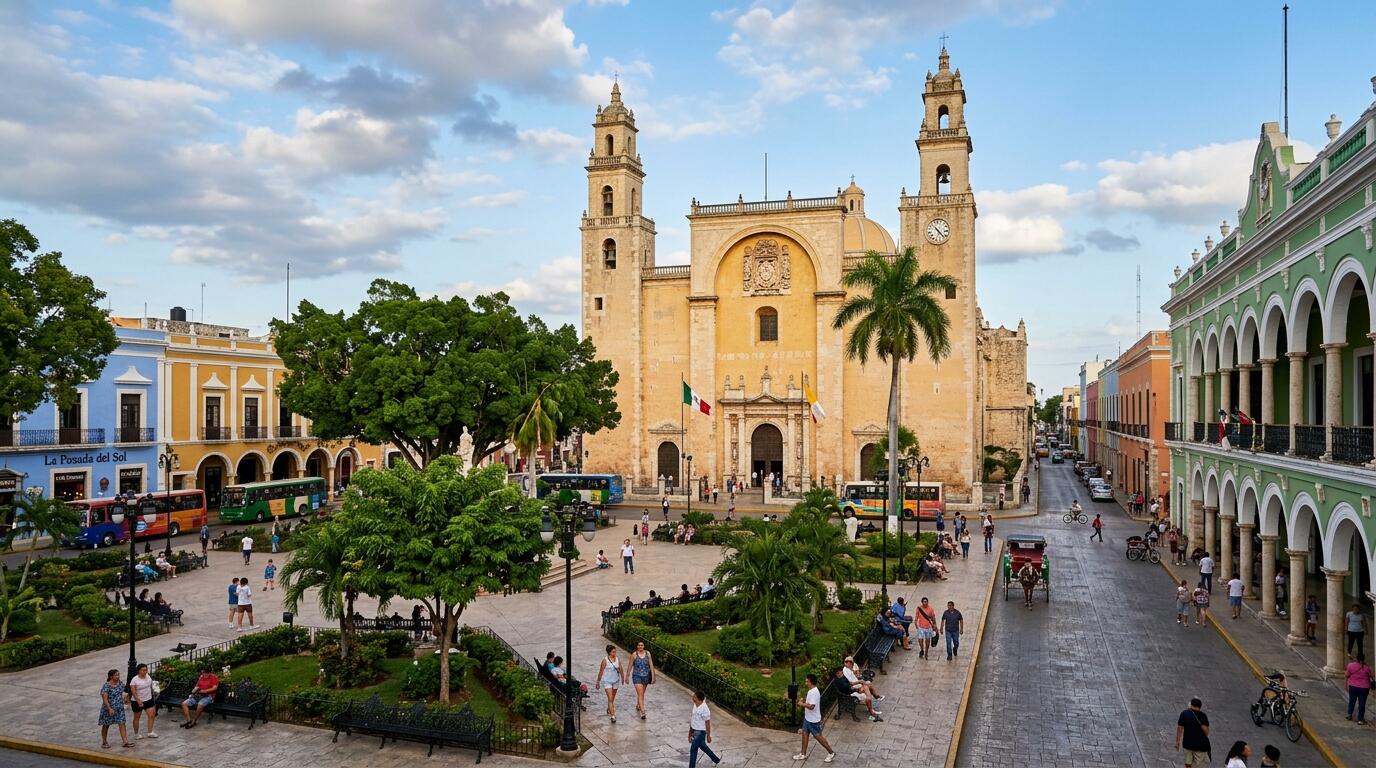
The historic center — Plaza Grande, Paseo de Montejo, Calle 60 corridor, and surrounding streets — is Mérida at its best. Well-lit, heavily trafficked, with strong police presence during the day and evenings. Sunday's Mérida en Domingo (free cultural events around Plaza Grande) is one of the safest, most family-friendly urban experiences in all of Mexico.

Paseo de Montejo — ⭐⭐⭐⭐⭐ (Excellent)

Mérida's grand boulevard, lined with restored hacienda mansions, upscale restaurants, art galleries, and the Museo de Arte Contemporáneo (MACAY). Comparable to a European boulevard in ambiance. Day and evening security is excellent. The restaurants and cafes along Montejo attract an affluent local and expat clientele.

Colonia García Ginerés — ⭐⭐⭐⭐⭐ (Excellent)

A quiet residential neighborhood popular with expats and upper-middle-class locals. Tree-lined streets, artisan workshops, low foot traffic but very safe. The Sunday market at Parque García Ginerés is a neighborhood gem.

Colonia Itzimná / Colonia Chuburná — ⭐⭐⭐⭐ (Very Good)

Upscale residential areas with excellent security. Home to many expats, good restaurants, and local services. Safe for walking during the day and evening.

Norte (Altabrisa, Montes de Amé, Chuburná Puerto) — ⭐⭐⭐⭐ (Very Good)

The northern zones host major shopping malls (Altabrisa, Galerías Mérida), hospitals, and gated communities. Safe and modern, though requires a car or taxi — not walkable from Centro.

Colonia México / Francisco de Montejo — ⭐⭐⭐ (Good, Standard Urban Caution)

Working-class neighborhoods with some petty crime. Generally safe during the day, exercise standard urban caution at night. Not a tourist area.

Peripheral neighborhoods (Oriente, Sur) — ⭐⭐ (Caution)

Areas like Fraccionamiento Las Américas, Colonia Emiliano Zapata Sur, and distant peripheral neighborhoods have higher crime rates and no tourist infrastructure. Avoid these unless you have a specific reason and local guide.

Crime Statistics & Trends

Data from SESNSP and INEGI (Mexico's National Statistics Institute) for 2024-2025:

For context: Mérida has approximately 1 homicide per 100,000 residents — below many European capitals and comparable to cities like Amsterdam or Copenhagen.

Safe Activities

Areas to Avoid

Safe Transportation

Top 5 Scams in Mérida

1. Phone Theft in Crowded Markets

Mercado Lucas de Gálvez and crowded Sunday events are the primary locations for phone and wallet theft — not violent robbery but skilled pickpocketing. Keep phones in front pockets or a secure crossbody bag. Don't walk and use your phone simultaneously in crowded areas.

2. Fake Tour Guides at Ruins

At Chichén Itzá and other major sites, unofficial guides approach tourists claiming to offer "insider access" or "secret areas" for cash. They often provide misinformation and overcharge. Always book guides through the official booth at the entrance or through your hotel.

3. Overpriced Cenote "Packages"

Some travel agencies in Centro sell cenote tours at significantly inflated prices with hidden add-on fees. Compare prices from multiple agencies, or better yet, book directly through your hotel concierge or well-reviewed operators on Google Maps.

4. ATM Skimming

While less common than in Cancún, ATM skimming devices have been reported on standalone ATMs in tourist areas. Use bank-branch ATMs (BBVA, Banamex, Banorte) during business hours. Cover your PIN, check for loose card readers before inserting.

5. "Free" Art Gallery Pressure

Some galleries around Paseo de Montejo invite tourists in for a "free" look, then use heavy sales pressure for expensive art purchases. You're never obligated to buy — a firm "no gracias" is sufficient. Legitimate galleries welcome browsers without pressure.

Emergency Contacts

Frequently Asked Questions

Is Mérida really Mexico's safest city?

By multiple metrics — homicide rate, street crime data, expat satisfaction surveys, and government security indices — Mérida consistently ranks as Mexico's safest large city. This is backed by real data, not just tourism promotion. The city's homicide rate of approximately 3-5 per 100,000 is comparable to European capitals.

Is Mérida safe for solo female travelers?

Mérida is widely considered one of the best Mexican cities for solo female travel. The large expat community, walkable historic center, reliable Uber service, and low violent crime rate make it significantly safer than most Mexican alternatives. Standard precautions (avoid excessive alcohol in public, don't walk alone in peripheral areas at night) still apply.

How hot is Mérida, and does the heat affect safety?

Mérida is extremely hot — average highs of 34-38°C (93-100°F) from April through September. Heat is a genuine health risk: stay hydrated, limit outdoor exposure between noon and 4 PM, wear sunscreen and light clothing. The safest time to visit climate-wise is November through February, when temperatures are 25-30°C (77-86°F).

Is it safe to visit cenotes near Mérida?

Cenotes are extremely safe activities — the water quality in Yucatecan cenotes is generally excellent (filtered through limestone), and the main cenote sites have proper infrastructure. The only risks are swimming-related (follow guide instructions, don't dive headfirst) and sun exposure. Reputable cenote operators include safety briefings and life jackets.

Is driving from Mérida to Cancún safe?

The Mérida-Cancún highway (Federal Highway 180 or the cuota/toll road) is safe during daylight hours and is one of the better-maintained roads in Mexico. The 3.5-4 hour drive passes through small Yucatecan towns and flat jungle terrain. Drive during the day, have a full tank of gas, and keep valuables out of sight. The toll road (Autopista) is faster and slightly safer than the free road.


Get Your Personalized Safety Assessment


Planning a trip to Mérida or the Yucatán Peninsula? Get a personalized safety assessment based on your specific travel dates, itinerary, and accommodation to ensure you have all the information you need for a safe trip.


Get your personalized safety assessment →