Guadalajara Travel Safety Tips 2026: Your Practical Guide to a Safe Visit
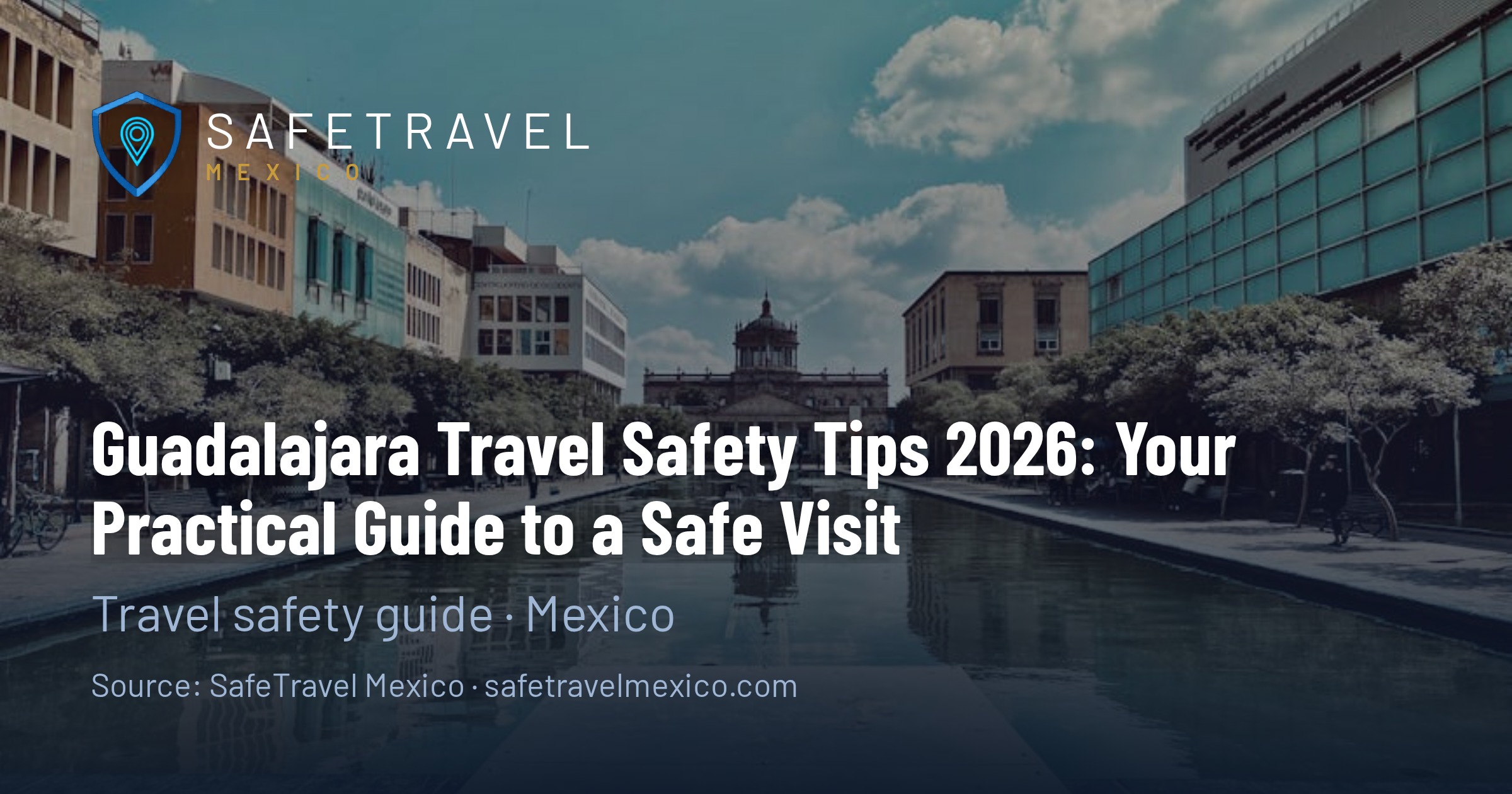
Guadalajara Travel Safety Tips 2026: Your Practical Guide to a Safe Visit
Guadalajara is Mexico's second-largest city — a vibrant metropolis of over 5 million people in the heart of Jalisco state. It is the birthplace of mariachi, the home of tequila, and one of the country's most culturally rich destinations. Its historic centro, sprawling suburban neighborhoods, and proximity to Lake Chapala make it a compelling stop for travelers who want to experience authentic Mexican life beyond the resort towns.
Like any large urban center, Guadalajara has real safety considerations that are manageable with the right information. This guide gives you practical, data-informed safety tips based on SESNSP crime statistics and on-the-ground patterns.
Understanding Guadalajara's Safety Landscape
Guadalajara's safety profile is complex. The metropolitan area — known as ZMG (Zona Metropolitana de Guadalajara) — includes not just the central municipality but also Zapopan, Tonalá, Tlaquepaque, and dozens of others. These areas have very different risk profiles.
The central tourist-oriented areas of Guadalajara — particularly the Historic Centro, the financial district around Chapultepec and Providencia, and the upscale neighborhood of Andares — have a relatively low violent crime risk for visitors who use basic precautions. The city sees millions of domestic and international visitors each year without incident.
The main risks for travelers are opportunistic property crime — pickpocketing, bag snatching, and theft from vehicles — and tourist-targeted scams. Violent crime, while present in the city as a whole, is statistically concentrated in specific peripheral neighborhoods that are not part of a typical tourist itinerary.
Jalisco state does have a presence of organized crime groups, including the CJNG (Cartel Jalisco Nueva Generación), one of the most powerful in Mexico. However, CJNG activity is concentrated in drug trafficking corridors and peripheral areas far from where tourists operate. The overwhelming majority of visits to Guadalajara are trouble-free.
Getting There: Guadalajara Airport Safety
Guadalajara International Airport (GDL) — officially named Miguel Hidalgo y Costilla International Airport — is Mexico's third-busiest airport, serving millions of passengers annually. It is located about 15 kilometers south of the city center in the municipality of Zapopan.
Safety tips for arriving in Guadalajara:
- Use official airport taxi services or pre-arranged hotel transfers. Authorized taxi booths are inside the terminal. Ignore unsolicited offers from individuals in the arrivals area.
- If your hotel offers airport shuttle service, book it in advance — this eliminates fare ambiguity.
- Exchange currency at official bank booths or airport ATMs. Airport exchange rates are reasonable.
- Keep your passport secure. Carry a photocopy for daily use and store the original in your hotel safe.
- Airport restrooms may have unofficial "attendants" who expect tips — this is a minor annoyance, not a safety concern.
- Download offline maps or ensure you have data connectivity before leaving the airport to navigate confidently.
- Use toll highways (autopistas) rather than libre (free) roads where possible.
- Never leave valuables visible in the vehicle.
- At gas stations, stay with your car and verify the pump display.
- Driving at night in the outer metro area is not recommended due to limited lighting on some roads.
- Use toll highways (autopista) where possible.
- Do not drive at night on coastal highways — lighting is poor and unexpected obstacles are common.
- The Pacific coast of Jalisco and Colima has strong currents. If visiting beaches, swim only in designated safe zones with lifeguard towers. Pacific currents can be deceptively strong even for strong swimmers.
- Puerto Vallarta is a major tourist destination with a well-developed tourist infrastructure. Standard resort-area precautions apply.
- Police (emergency): 911
- Fire: 911
- Ambulance: 911
- Tourist protection (PROTEJ): 911
- Stay in established neighborhoods: Centro, Chapultepec/Providencia, or Andares.
- Use rideshare apps rather than street taxis at night.
- Tell someone your plans, especially if heading to less touristy areas.
- Download an offline map and share your location with someone at home.
- Spanish is helpful but not essential in the main tourist areas.
- [ ] Use official airport taxis or pre-arranged hotel transfers
- [ ] Agree on taxi fares before departing, or insist on the meter
- [ ] Use rideshare apps (Uber/DiDi) at night
- [ ] Keep passport secure; carry a photocopy for daily use
- [ ] Use bank-branch ATMs, not street machines
- [ ] Stay in well-lit central areas after dark
- [ ] Take a taxi rather than walking in Centro after 10pm
- [ ] Keep phones and wallets secure in crowded market areas
- [ ] Decline unofficial tour guides at major attractions
- [ ] Download offline maps and share your location with someone at home
- [ ] Save emergency numbers: 911 (police, fire, ambulance)
- [ ] Research your specific neighborhood before booking accommodation
- [ ] Consider travel insurance that covers medical care
- [ ] Avoid driving at night on coastal or peripheral highways
- [ ] Swim only at designated safe beach areas on the Pacific coast
Getting Around: Transportation Safety
Guadalajara is a large, spread-out city. Getting around safely requires choosing the right transport and knowing a few key rules.
Mi Macro Periférico (BRT):
Guadalajara's Bus Rapid Transit system, Mi Macro Periférico, runs along the city's outer orbital road. It is clean, air-conditioned, and generally safe. It is one of the best options for getting between zones without a car. Stations have security personnel during operating hours.
Conventional buses:
The city's regular bus system is extensive but can be confusing for visitors. Routes are largely in Spanish, and the system serves working-class neighborhoods as well as tourist areas. Standard urban precautions apply — keep valuables secure and be aware of your surroundings.
Rideshare apps (Uber, DiDi):
Uber and DiDi operate throughout the Guadalajara metro area and are widely used. They are generally safe, transparent in pricing, and significantly preferable to street taxis for visitors who do not speak fluent Spanish. Rideshare is the recommended option for getting around at night.
Street taxis:
Street taxis are available throughout the city. In the tourist-oriented neighborhoods (Centro, Chapultepec, Providencia, Andares), taxis are generally safe but meter use is uncommon. Always agree on a fare before departing, or confirm with the driver that they will use the taxímetro. If a driver refuses to use a meter, it is acceptable to exit and find another taxi.
Rental cars:
Many travelers rent cars to explore Lake Chapala, Tonalá, or Tlaquepaque independently. If renting:
Tlaquepaque and Tonalá:
These adjacent municipalities are popular for their artisan markets and are generally safe during the day. The Tonala market is one of the largest in Latin America. Take normal big-city precautions: keep phones secure in crowded market areas, be wary of unofficial guides, and use official parking lots rather than street parking.
Neighborhood Safety: Where to Go, Where to Be Cautious
Safe Areas for Tourists
Historic Centro (Centro Histórico) — The heart of Guadalajara. The cathedral, Teatro Degollado, Museo Regional de Guadalajara, and the surrounding plazas are safe during the day and into the evening. The area has a strong police presence, especially near the main plazas. At night, stick to the well-lit central blocks and take a taxi after 10pm.
Providencia and Chapultepec — The neighborhood around Avenida Chapultepec and the surrounding streets of Providencia is the city's main nightlife and dining district. It is popular with young locals and visitors, well-policed, and generally safe. The area has security patrols on weekend nights.
Andares — The upscale commercial district in Zapopan. Home to luxury shopping, restaurants, and the headers. This is one of the safest areas in the city, with private security and regular police patrols. Popular with visitors who prefer an upscale environment.
Tlaquepaque — A designated tourist corridor known for its galleries, restaurants, and artisan shops. During business hours it is very safe. The main tourist streets have a visible police presence.
Lake Chapala and Ajijic — The area around Mexico's largest lake is a popular weekend destination for Guadalajara residents and expats. The towns of Ajijic and Chapala are generally safe. Use standard urban precautions and be aware that this is a residential area, not a resort zone.
Areas Requiring Caution
Peripheral neighborhoods of the ZMG at night — Certain municipalities and neighborhoods on the outskirts of the metro area — including parts of Ixtlahuacán de los Membrillos and El Salto — have a different safety profile. These are working-class residential areas that are not tourist destinations and should not be part of a visitor's itinerary after dark.
Non-tourist centro blocks at night — The Historic Centro is safe near the main plazas and cathedral, but the blocks further from the tourist core (particularly to the east and north of Avenida 16 de Septiembre) thin out after 9pm. Use a taxi for longer distances within Centro after dark.
Market areas at peak hours — The giant Tonala market and the San Juan de Dios market (also called Mercado de los Angeles) can be overwhelming in size and crowded. Pickpocketing is a risk in any crowded market. Keep phones and wallets secure in front pockets or bags that close securely.
Beach and Day Trip Safety
Guadalajara is inland, but many visitors use it as a base for day trips or make the drive to the Pacific coast.
Pacific Coast (Manzanillo, Barra de Navidad, Puerto Vallarta):
The nearest coastal destinations from Guadalajara are 2–4 hours by car. If driving:
Lake Chapala:
The lake area is generally safe for day visits. If taking a boat tour or visiting smaller communities around the lake, use established tour operators rather than informal arrangements.
Common Scams and How to Avoid Them
ATM fraud:
ATM skimming and cash trapping are known issues in Guadalajara, as in any large Mexican city. Use ATMs inside bank branches rather than standalone machines on the street. Withdraw during daylight hours when possible. Check your card statements regularly for unauthorized charges.
Taxi meter fraud:
As noted above, some street taxi drivers may claim the meter is broken or conveniently forget to start it. Agree on a fare in advance or insist on the meter before departing.
Unofficial tour guides:
In Centro and around major attractions, individuals may offer to be your "guide" for a fee. These are not official guides. Politely decline. Official guides will have credentials and will not approach you unsolicited.
Counterfeit artisan goods:
Tlaquepaque and Tonala sell genuine artisan crafts, but market areas also have mass-produced goods labeled as hand-made. If you are purchasing high-value items (silver, talavera pottery, fine leather), buy from established galleries or workshops with certificates of authenticity rather than street vendors.
Overcharging at restaurants:
In tourist-oriented Centro and Tlaquepaque restaurants, prices are usually posted or on a menu. Confirm prices before ordering to avoid surprises. This is more of a financial annoyance than a safety concern.
Emergency Contacts and Health
Emergency numbers:
Tourist assistance:
The Secretaría de Turismo operates tourist assistance booths (Módulo de Atención Turística) in the Historic Centro and at the airport. They can help with complaints, directions, and emergency referrals. English is limited outside major tourist areas.
Medical care:
Guadalajara has excellent private hospitals and medical facilities — among the best in Latin America. If you need medical attention, the best private hospitals are on the west side of the city (Zapopan/Andares area). Carry travel insurance that covers medical evacuation if you plan to visit more remote areas. Pharmacies (Farmacias Guadalajara, Farmacias del Ahorro, Similares) are widely available for minor health needs.
Is Guadalajara Safe for Solo Travelers?
Guadalajara is generally safe for solo travelers who use the same basic precautions they would in any large city. The city's active social scene, established tourist infrastructure, and mix of accommodation options make it a viable solo destination.
Tips for solo travelers:
Female solo travelers:
Guadalajara is a major urban center and female travelers report generally positive experiences with standard precautions. The Chapultepec/Providencia area is lively and popular with all visitors. Like any large city, street harassment can occur. Normal big-city awareness applies: avoid isolated areas after dark, trust your instincts, and use rideshare or taxis rather than walking alone at night.
Is Guadalajara Safe for Families?
Guadalajara is well-suited for families. The city has excellent museums (Museo Regional de Guadalajara, Museo del tequila), parks (Parque Revolution, Parque metropolitano), and cultural attractions that are engaging for children. The Tlaquepaque artisan district is colorful and fascinating for all ages.
Use the same neighborhood precautions as for any traveler, and ensure children are supervised in crowded market areas where pickpocketing risk is higher. Child car seats are not always available in rideshares — bring your own if renting a car.
Quick Safety Checklist for Guadalajara
Final Thoughts
Guadalajara is one of Mexico's most rewarding cities — culturally rich, gastronomically outstanding, and geographically versatile. Millions of visitors travel there every year without incident. The city has real challenges, as do all large urban centers, but the tourist-oriented areas are generally safe with straightforward precautions.
The key to a safe visit: stay aware in crowded areas, use rideshare or metered taxis at night, keep valuables secure, and know which neighborhoods are your destination. If you do those things, Guadalajara delivers an extraordinary Mexican experience that few cities can match.
Ready to explore Mexico with confidence? Get your personalized safety assessment for Guadalajara and 50+ other Mexican cities at SafeTravelMexico.com/assess/v2.
Data sources: SESNSP crime statistics, municipal tourism data, and on-the-ground safety patterns as of 2026.